While a professional thermal diamond tester is the gold standard for separating real diamonds from glass or cubic zirconia, Moissanite presents a unique challenge. Because Moissanite is highly thermally conductive, it can sometimes pass a basic thermal test. So, how do professionals quickly tell them apart?
The secret lies in a dedicated 365nm UV (Ultraviolet) light. This simple yet powerful tool reveals the hidden chemical characteristics of the stones.
The Magic of Diamond Fluorescence
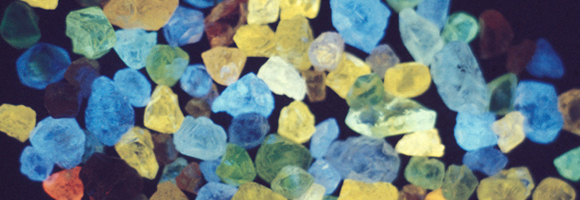
Natural diamonds are forged deep within the Earth over billions of years, often absorbing trace elements like nitrogen during their formation. Because of this, approximately 40% of natural diamonds exhibit a fluorescence reaction when exposed to 365nm UV light.
Every natural diamond is unique. If you place a batch of real, natural diamonds together under a UV light, you will witness a fascinating phenomenon: some will glow with a strong blue hue, others might show faint yellow or green, and some won't glow at all. They will display various levels of brightness and colors.
The Moissanite Reaction (or lack thereof)
Moissanite, on the other hand, is almost entirely lab-created in highly controlled environments. Because it lacks the unpredictable trace elements found in nature, 99% of Moissanite stones show absolutely NO fluorescence reaction under UV light.
Advanced Techniques: Spotting the "Double Lines"
UV light isn't just for checking fluorescence. When you combine UV illumination with a jeweler's loupe, you can observe the stone's internal structure much more clearly.
Moissanite is doubly refractive (birefringent), whereas a diamond is singly refractive. If you look closely through the crown facets at an angle using a magnifier under proper lighting, Moissanite will often display a "doubling" effect on its back facet lines (they look like blurry double lines). A real diamond will always show crisp, single lines.
Equip Yourself with the Right Tools
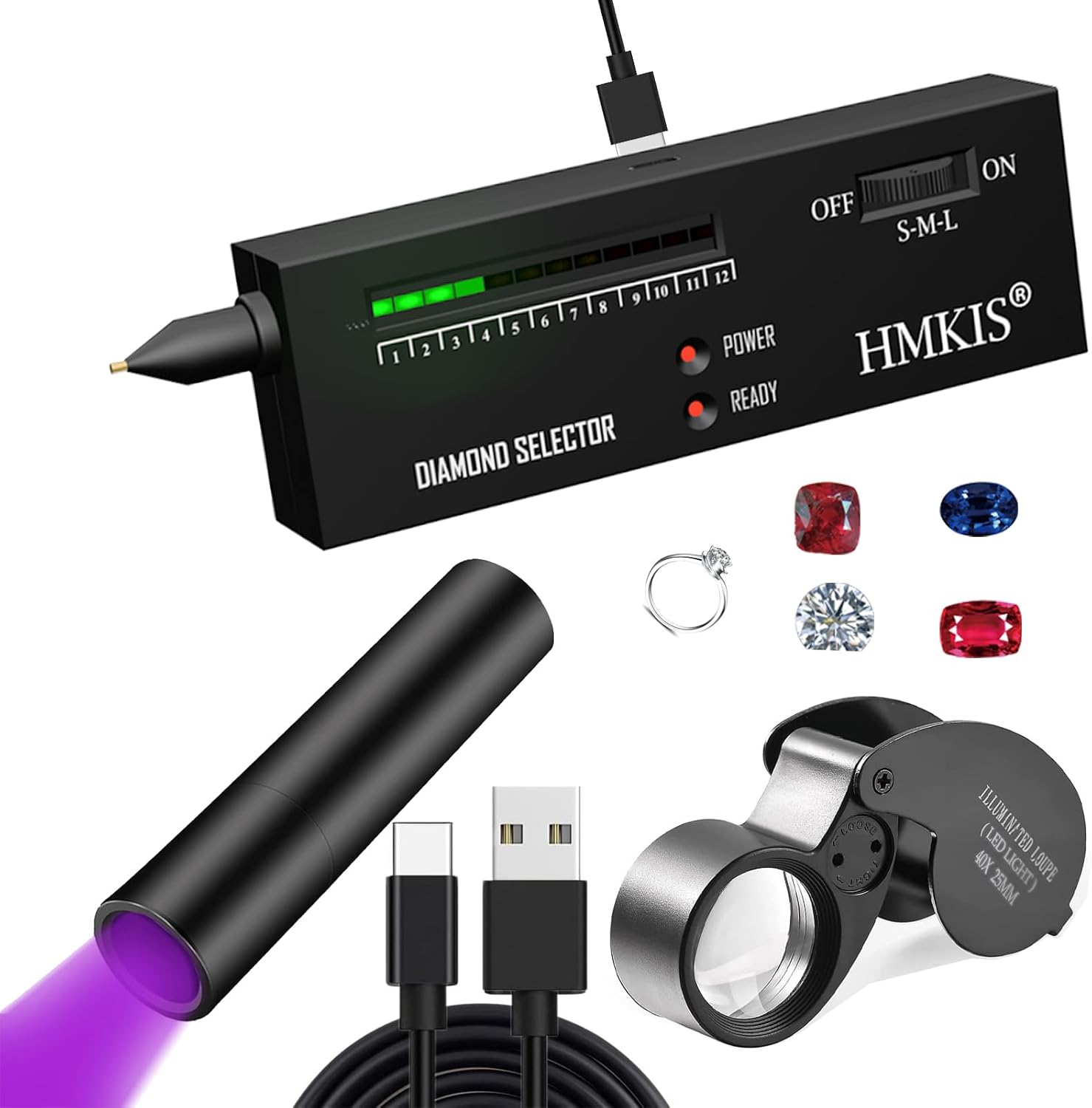
HMKIS Diamond Tester + 365nm UV Light Effectively Screen Natural Diamonds, Moissanites, and CZ. Powered by USB, Jewelry Diamond Tester Applicable to Diamonds 0.025ct and Above(Non-Rechargeabe)
Get Your Testing Kit on Amazon